

Intel EUs are gone! The new building block of its 'gaming first' graphics card is the Xe-core | PC Gamer - ferraridawas1952
Intel EUs are gone! The new unit of its 'gaming first base' graphics card is the Xe-core
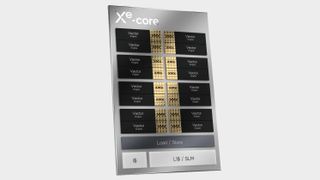
In a beseech to rebrand every bit of its art bill architecture, Xe, Intel has killed off the humble Execution Unit. The Europium is the key building block of Intel's graphics architectures, but after years of use, Intel is putt the term out to pasture to make way for a new unit of measurement, the Xe-core.
The change in name only comes as Intel says there's too much inside a single Atomic number 63 to really separate it as an EU nowadays.
This doesn't whole change what an EU/Xe-core actually does, though. An Intel European Economic Community currently contains multiple ALUs for floating point and integer operations, and the duplicate goes for an Xe-core. However, the new Xe-nub terminology does play into the significant shake upbound incoming with Intel's first discrete gaming artwork card generation, codenamed Intel Alchemist.
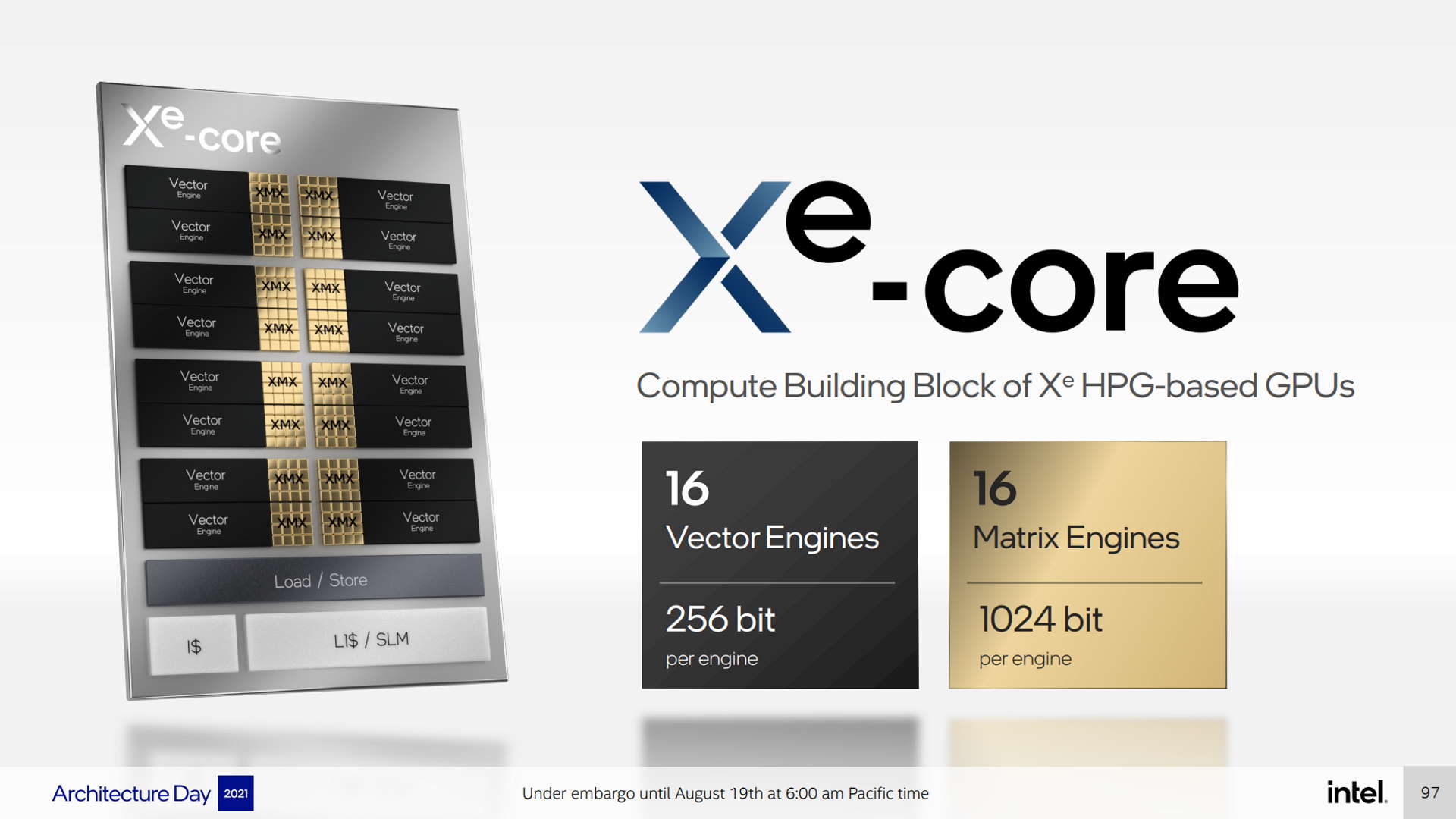
The new Xenon-core within Alchemist GPUs comes with 16 vector engines and 16 ground substance engines. That's actually double what's found within the Ponte Vecchio GPU, which is built with the Xe-HPC architecture and oriented for the Aurora supercomputer.
Intel says that this is a necessary step to scaling up gaming graphics card game, and that this chip shot was specially optimised for "play first".
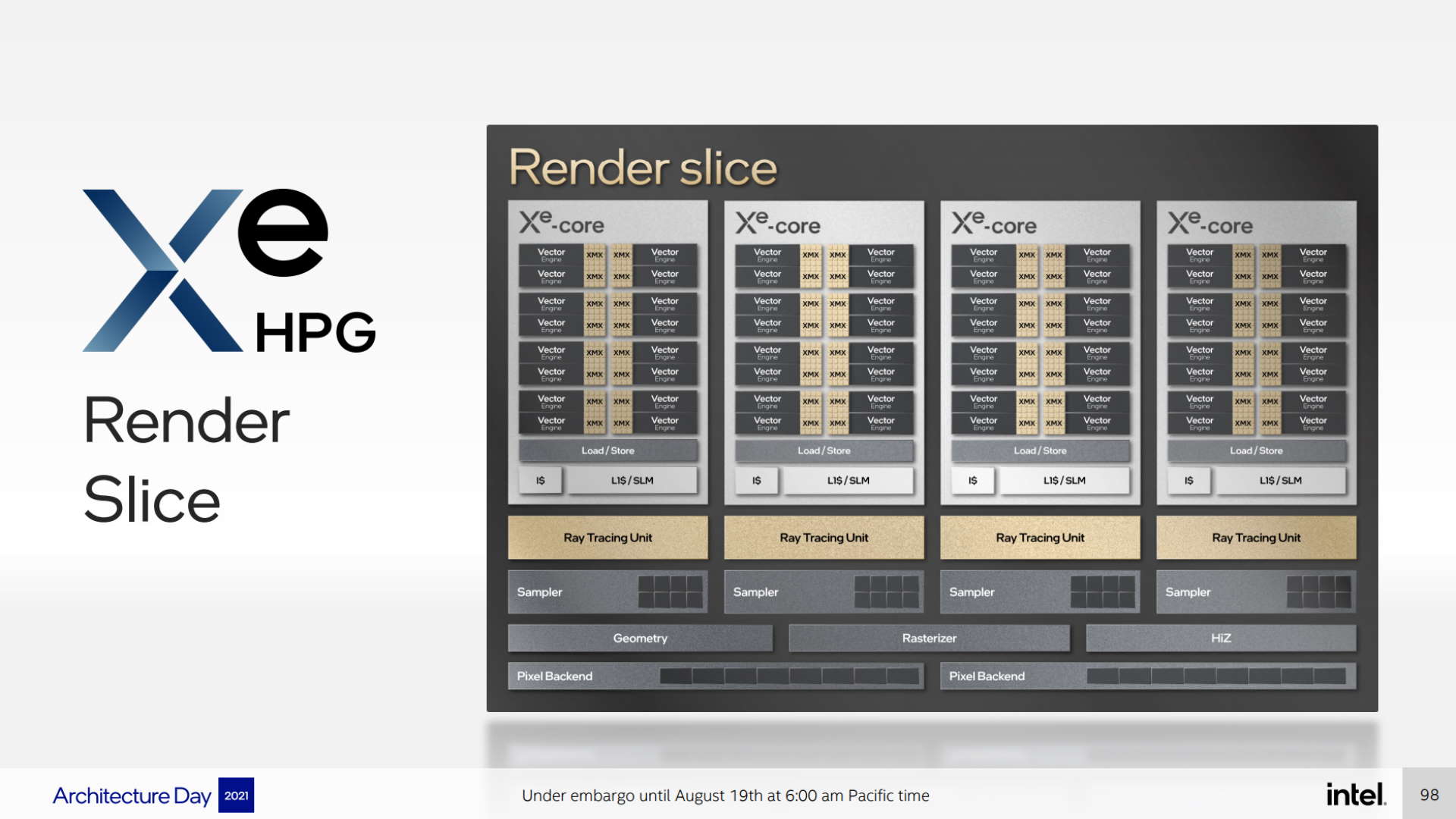
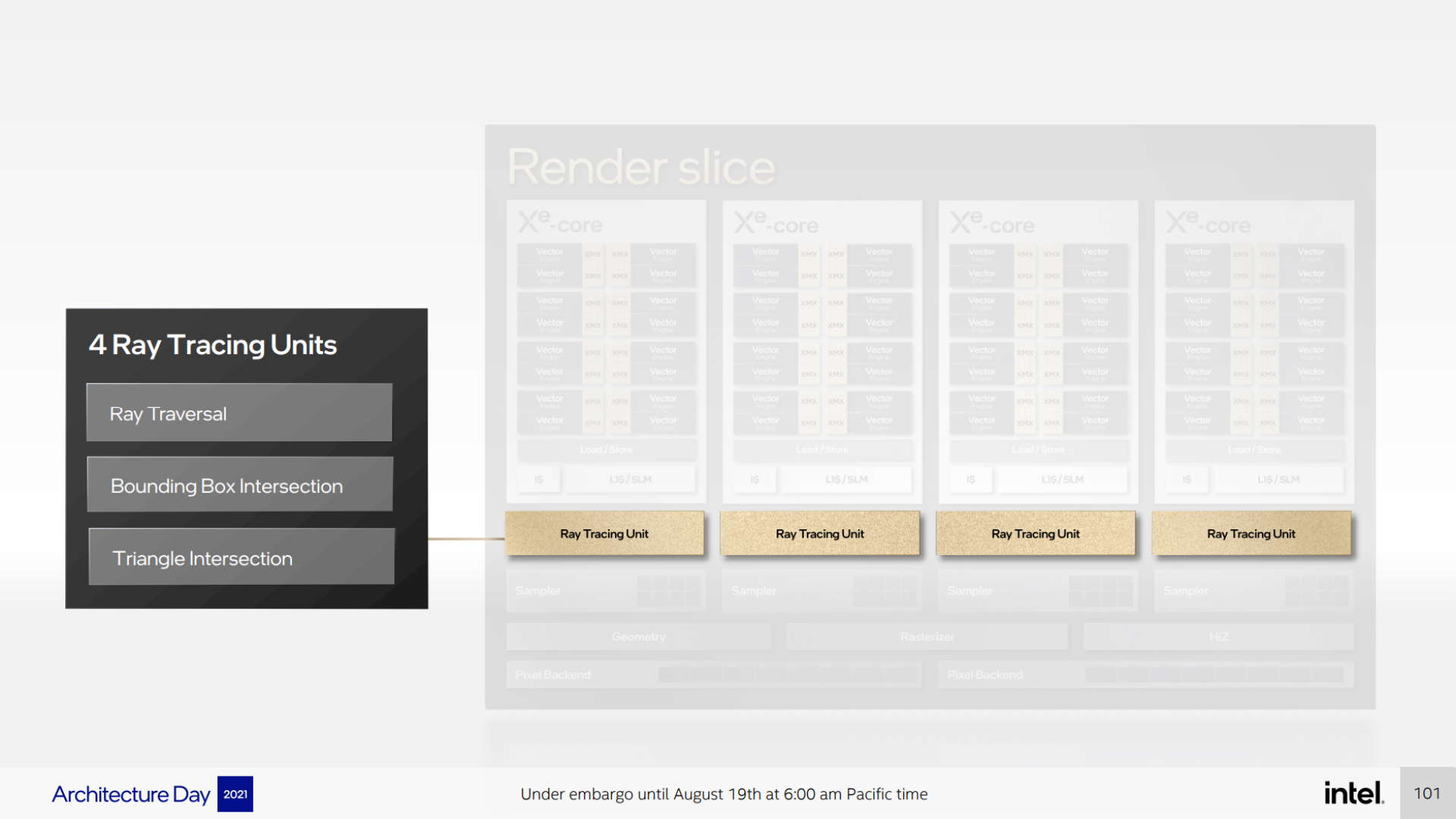
Zooming out a touch from the Xe-core and you'll find a Render Slice, which contains four of these Xe-cores clusters, a geosynchronous function unit for DirectX 12 Ultimate support, and four new ray tracing acceleration units. Then a situated of eight Render Slices leave share access to L2 cache.
These new Intel Ray Trace Units are fashioned to speed up shaft traversal, bounding package convergence, and triangle cartesian product. This sounds a lot like the RT Cores inside Nvidia's Ampere GPUs, and the Ray Accelerators AMD has inside its RDNA 2 computer architecture. Though we put on't know how they stand up against each other in raw performance terms.
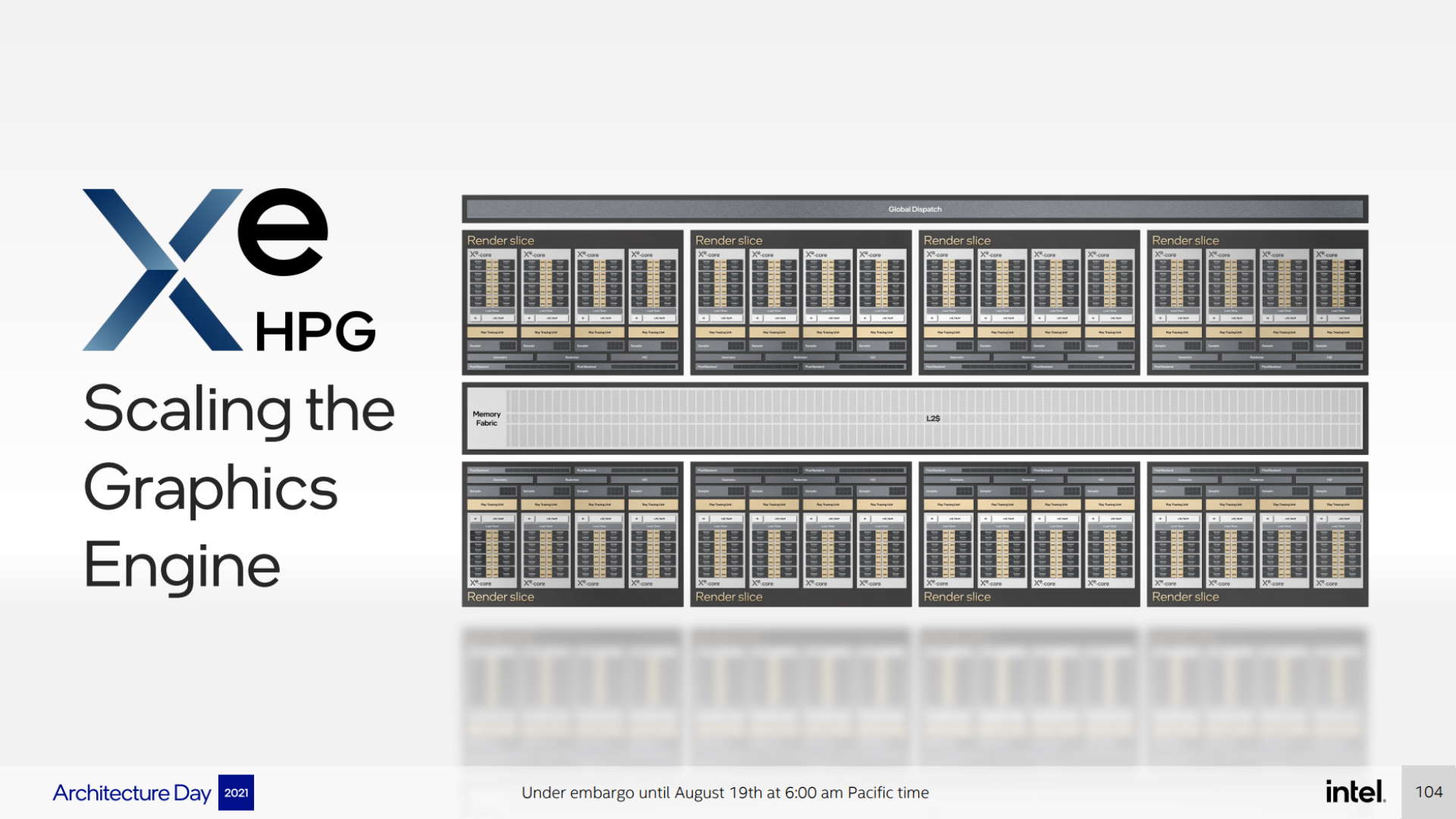
Once again, that general make-up is different to Ponte Vecchio on the Xe-HPC computer architecture, which has fewer engines per Xe-core but a greater number of Xe-cores per Render Slice. At that place's 16 Xenon-cores in every HPC slice with even as many ray tracing units. A set of four Render Slices then share access to L2 cache, HBM2e controllers, and a media locomotive. So happening and so fourth.
There are numerous levels to Ponte Vecchio that I dare not get across here.
Alchemist wish be built on TSMC's 6N process, however, patc Ponte Vecchio will use a mix of TSMC's N5, N7, and Intel 7 outgrowth nodes—depending on which tile you tone at on the Ponte Vecchio package. Essentially, these are altogether very different chips.
What we're seeing, though, is imperviable of Intel's promised tweaks to the Intel Atomic number 54 architecture, dependent connected how they are intended to be used.
The gaming architecture is substantially disparate to the datacentre one, and both are estranged from the lour-spec Xe-LP chips in nowadays's laptops. This sort of segmentation International Relations and Security Network't an entirely new concept, both Nvidia and AMD's data eye cards look quite different to their gambling ones, but it's still exciting to see how another companion's engineers are tackling GPU design and usage in a new fashion.
Intel also confirms that beyond even the constellation of an Xe-nitty-gritty or Render Slicing, it has worked on optimisations and methodological analysis to gain the power efficiency of its forthcoming graphics card game—these include tweaks to the architecture itself, memory, and the card's physical design.
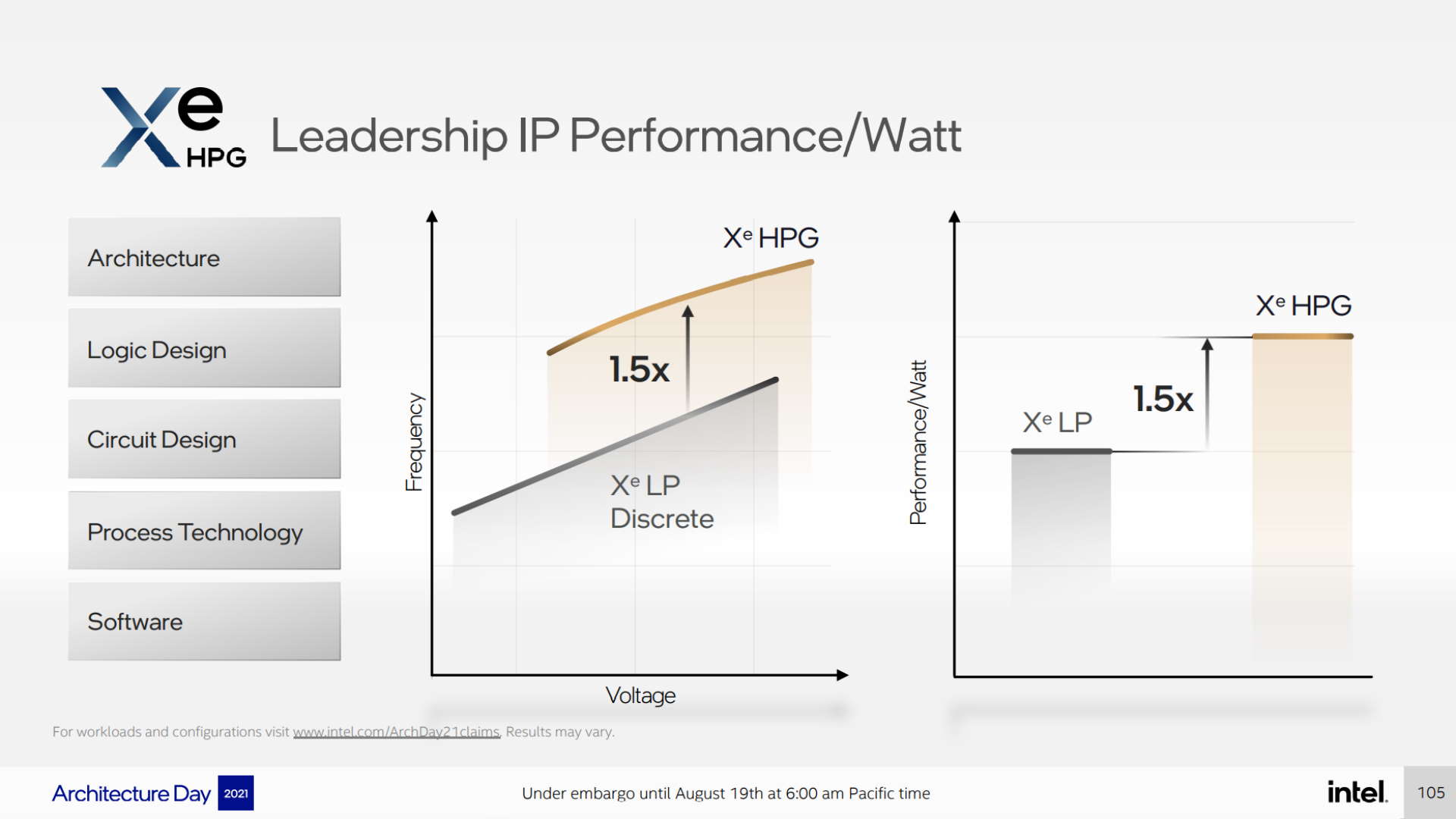
Considering wholly the optimisations Intel has made and the disparities in process nodes, the Xe-HPG architecture reportedly offers roughly 1.5x the public presentation/watt and runs at roughly 1.5x the frequency of Intel's Xe-LP chips.
Spell it's felt we've had a fairly redemptive clutch on what was expected out of DG2 even prior to Intel's Architecture Day, in regards to core counts and the specifics of the Atomic number 54-HPG architecture, maybe we didn't have quite as good a grip on it as we suspected. After all, looking what we know now, we were comparing apples to oranges between Intel Xe microarchitectures.
Intel's Alchemist nontextual matter cards are coming proto side by side year, and sometime before past we're likely to see more about the specifications for the actual cards themselves and how they perform versus the competition. That's when we'll find out if all this tinkering with the Xe architecture genuinely translates into frame rates.

Jacob attained his first byline writing for his own tech blog from his hometown in Wales in 2017. From in that location, he proportional to professionally breaking things at PCGamesN, where atomic number 2 would later win command of the kit cupboard as hardware editor. Nowadays, as precedential hardware editor in chief at PC Gamer, he spends his years reporting on the latest developments in the technology and gambling industry. When he's non writing nigh GPUs and CPUs, you'll rule him trying to get as far away from the modern world A possible away hazardous encampment.

Source: https://www.pcgamer.com/intel-alchemist-gpu-xe-core/
Posted by: ferraridawas1952.blogspot.com
0 Response to "Intel EUs are gone! The new building block of its 'gaming first' graphics card is the Xe-core | PC Gamer - ferraridawas1952"
Post a Comment